NEW ENGLISH EDITION · 343 PAGES · INSTANT DIGITAL ACCESS · DOUBLE GUARANTEE
The living-soil method · for backyards, homesteads & small farms

Grow Like a God: How to Get 100x More Food from Your Garden Naturally

Your soil already holds everything your plants need. It's locked away, waiting for a workforce of billions of bacteria and fungi to hand it over. This book shows you how to bring that workforce back to life, so your garden feeds itself and your family. No digging. No chemicals. No guesswork.

No-digZero synthetic fertilizerClay, sand, raised beds or fields
Not ready yet? Read Chapter 1 free →

Watch: the desert experiment (2:47). How a few handfuls of compost made New Mexico desert soil out-grow the Amazon.

4.9 / 5from [YOUR COUNT] verified readers
Backed by published soil scienceUsed on farms, orchards & raised bedsDouble guarantee
Jenna Y. from Texas just bought · 2 min ago
Watch this first · 2:47

A few handfuls of compost made a desert out-grow the Amazon

Microbiologist Dr. David Johnson stirred a few handfuls of fungal compost into water and sprayed it on worn-out farm soil in the New Mexico desert. No fertilizer, the same water as before. By his own measurements, his best fields now grow more than the Amazon rainforest. Here's how, and what it means for your garden.

Gardens like yours, one season later

This could be your garden next year

Ordinary backyards, raised beds and small farms that made the switch.

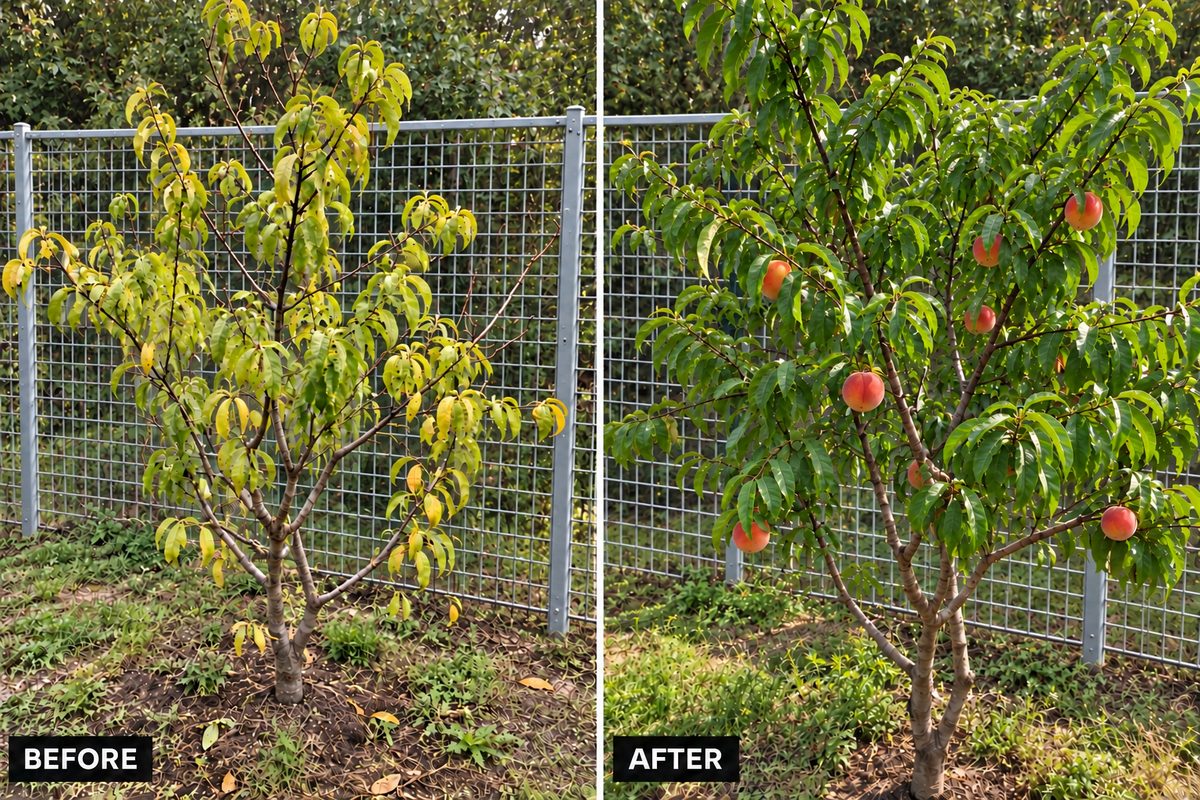
Yellowing peach tree to green leaves and fruit: before and after
Yellowing peach tree to green leaves and fruitWashed-out, yellow leaves, then a deep green canopy hanging with peaches.Steve H., Georgiaplaceholder name
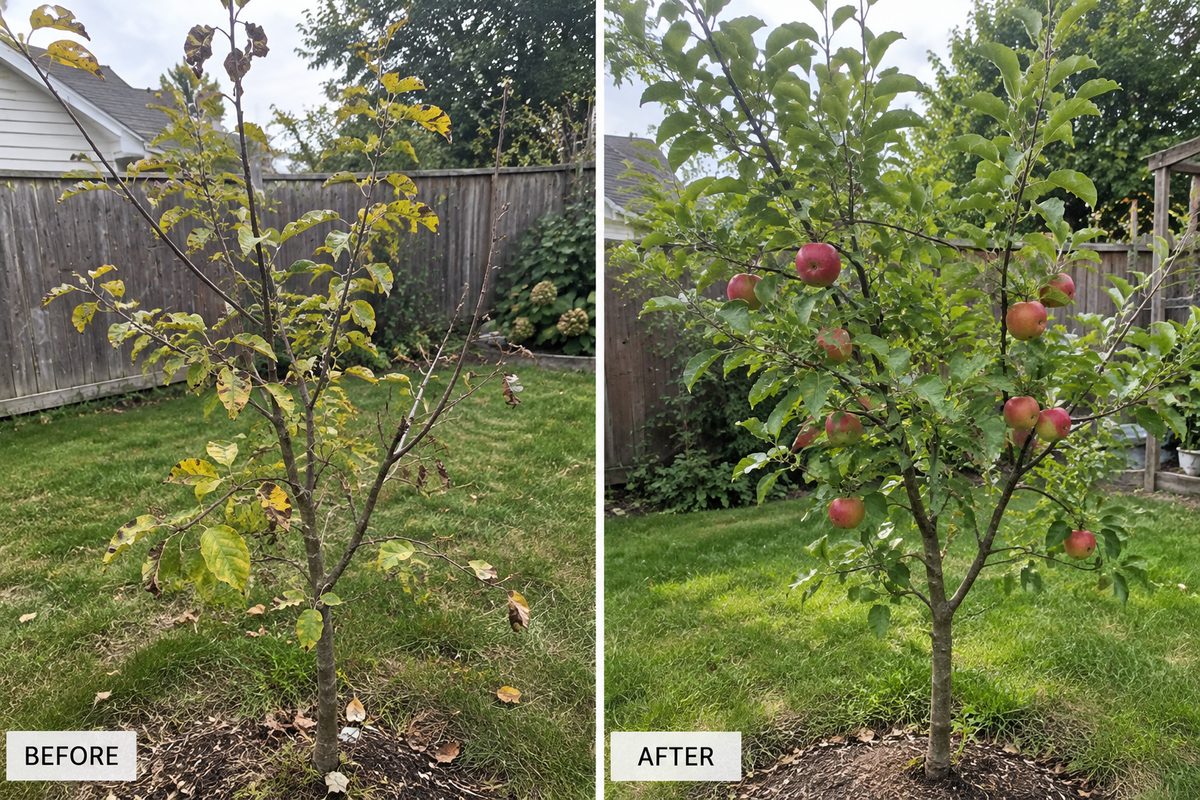
Struggling young apple tree, now fruiting: before and after
Struggling young apple tree, now fruitingSparse and yellowing at first, then full leaves and its first real crop.Rachel T., Kelowna, BCplaceholder name
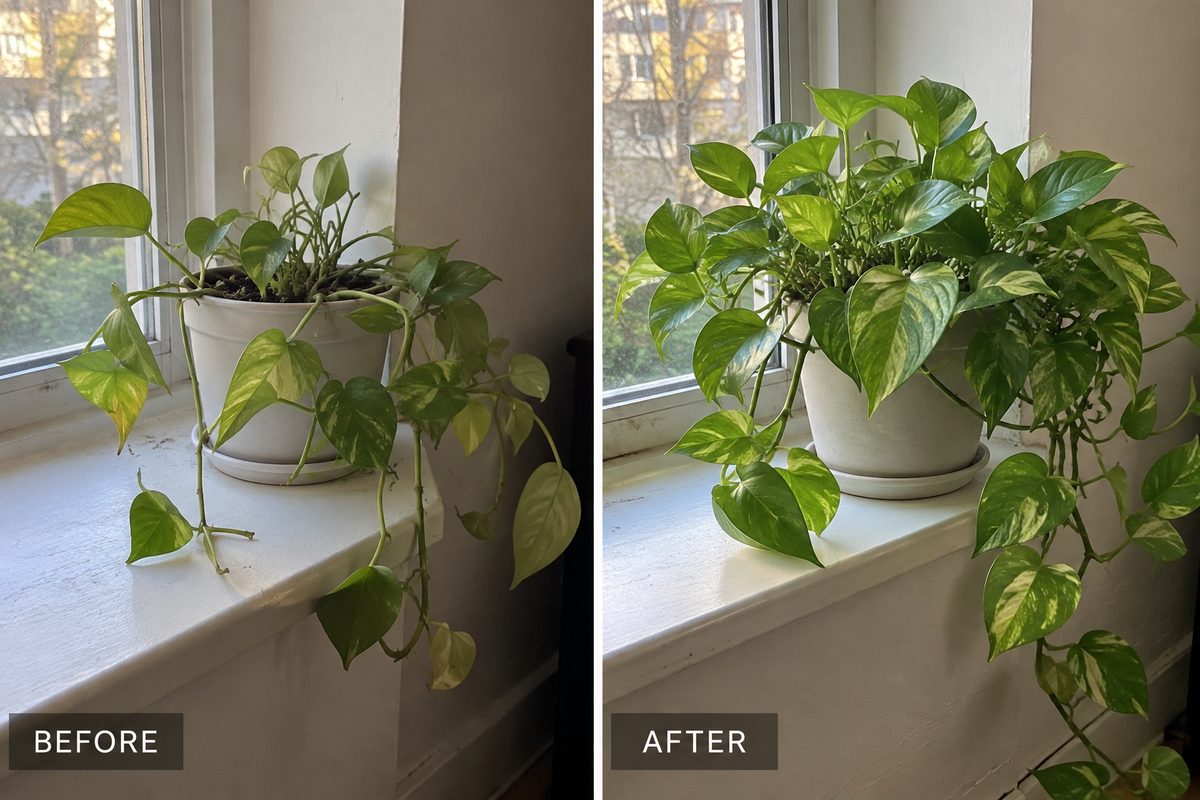
Leggy houseplant to a full, glossy pothos: before and after
Leggy houseplant to a full, glossy pothosLiving soil works in pots too: same plant, same window, twice as full.Jenny L., Chicago, ILplaceholder name

Individual results. Results depend on climate, starting soil and how closely the method is followed.

Is this you?

Tick every one that sounds like your garden

Tap the ones that fit.

Ticked even one? This book was written for you.

Show me how it works ↓
Quick question

What's the #1 mistake most gardeners make?

Knowing the answer puts you in the top 10% of growers. Take a guess:

From the author's field notebook

The underground economy your garden runs on

Every plant runs a trade deal under your feet. Once you can see it, you'll never garden the old way again.

The numbers under your feet

There's more life in one spoon of soil than people on Earth

1–10 bn

bacteria in one gram of healthy soil, roughly a teaspoon.

The Soil Food Web, Part 1
50,000 km

of fungal threads, at most, under one hectare of living soil. Enough to wrap the equator.

The Soil Food Web, Part 1
1–2%

of soil microbes can be grown in a lab. The rest of this workforce is still uncharted.

The Soil Food Web, Part 1
+34%

cucumber yield from compost tea alone. Root bacteria up 80× in 14 days, with no fertilizer.

Lowenfels, Teaming with Microbes
80%

of plants partner with mycorrhizal fungi, which can supply up to 80% of a plant's phosphorus.

How mycorrhizal fungi work
~43 t

dry biomass per hectare per year on Dr. Johnson's best desert fields, as he reports it. The Amazon grows about 25.

Dr. Johnson's reported figures
The hidden science of billion-dollar soil

The soil industry sells you what your dirt already contains

…and how you can do this basically for free

Sand and clay are about 99% crushed rock, packed with phosphorus, calcium, potassium and trace minerals. Most of the phosphorus in your soil is simply locked up, waiting. Bacteria dissolve rock. Fungi mine minerals out of crystals and carry them to the roots. The chemical model kills that workforce and then sells you a replacement, every season, forever. That's the business model.

The Big Agro wayThe living-soil way
FeedingA bag of N-P-K every seasonMicrobes deliver minerals already in your soil
DiggingTurn the beds every springNever dig. Worms and fungi aerate for you
PestsSpray on a scheduleHigh-sugar plants insects can't digest
WeedsPull or poisonRead them as a free soil test, then let the soil fix itself
CostGoes up every yearGoes down every year
Your soil in 5 yearsHarder, paler, more dependentDarker, deeper, alive, and richer than you found it
FREEFallen leavesFungal food and winter mulch
FREEWood chipsTree crews often drop them off at no charge
FREEKitchen scrapsThe feedstock for your first compost
PENNIESA cup of riceBait for a native microbe starter (IMO)
PENNIESCover-crop seedLiving roots that feed the soil year-round

What is the old way costing you?

$2,250

spent on inputs over 15 years, and your soil is poorer at the end of it. Living soil gets richer every year you leave it alone.

Stop feeding the plant. Feed the soil.

Here’s what happens when gardeners do

Real gardens, a season or two after switching to living soil.

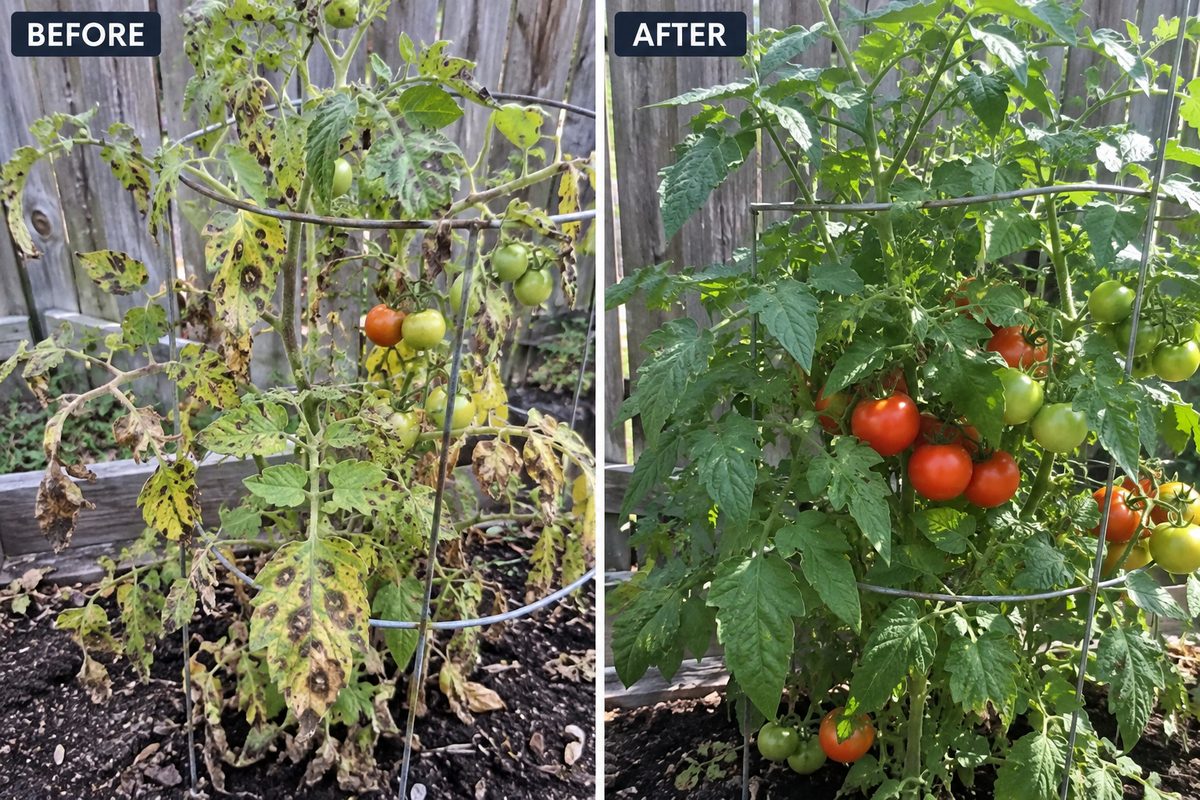
Spotty, struggling tomato to a loaded plant: before and after
Spotty, struggling tomato to a loaded plantYellow, spotted leaves gave way to clean green growth and a heavy set of fruit.Linda K., Ohioplaceholder name
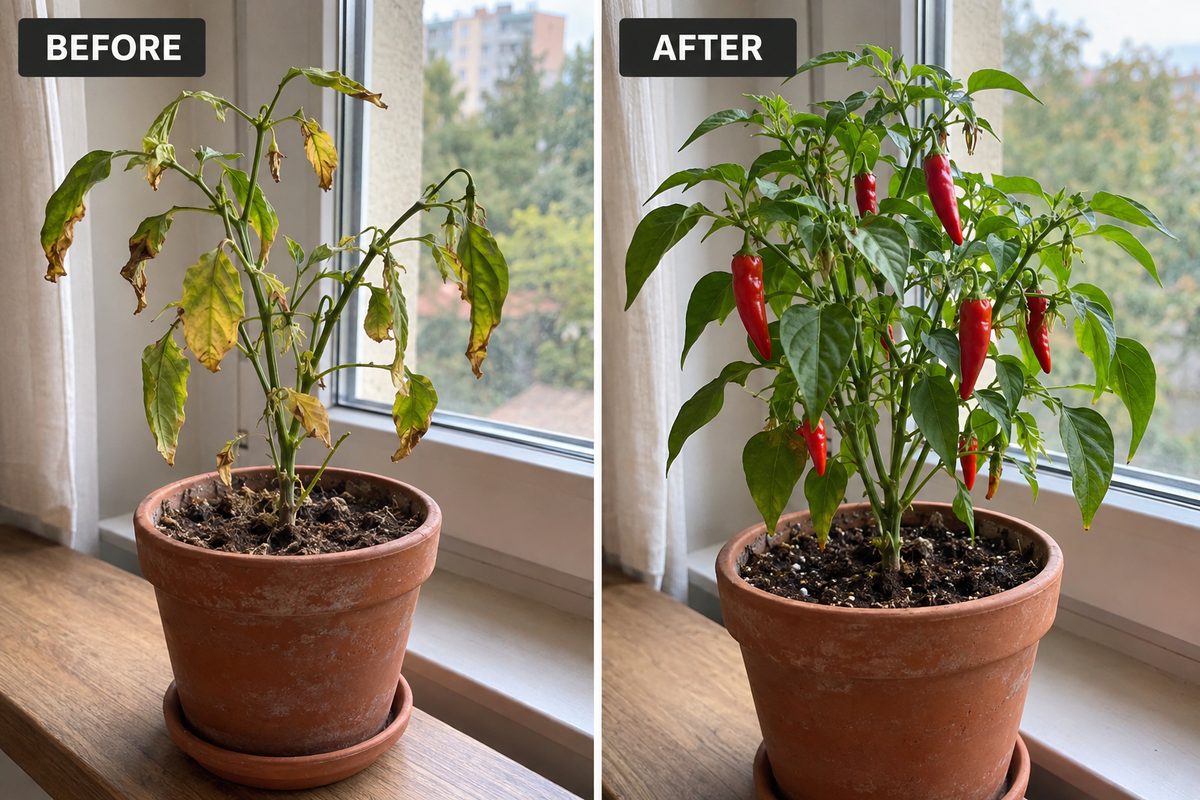
Drooping pepper to a plant full of chilies: before and after
Drooping pepper to a plant full of chiliesA tired windowsill pepper, back to dark leaves and covered in red chilies.Marco D., Toronto, ONplaceholder name
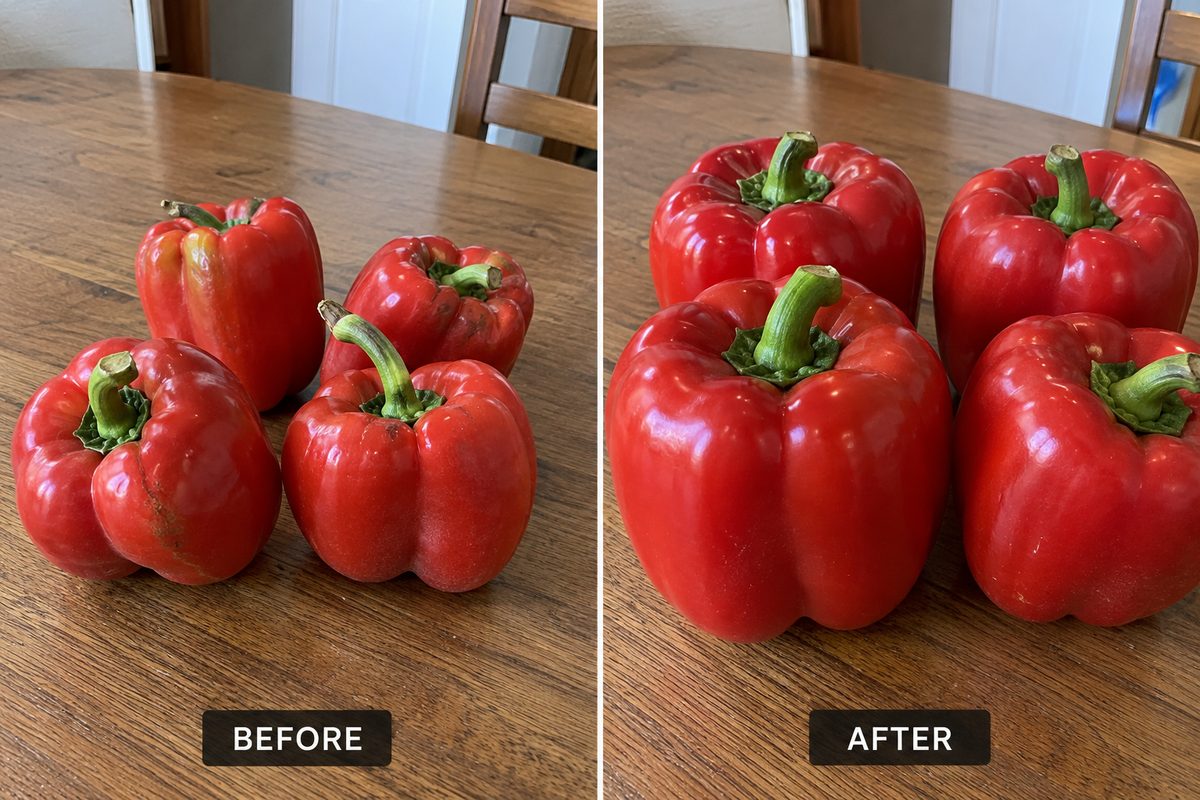
Small, creased peppers to big, glossy ones: before and after
Small, creased peppers to big, glossy onesSame kitchen table, a season apart. Thick walls, full shape, deep colour.Priya S., Austin, TXplaceholder name
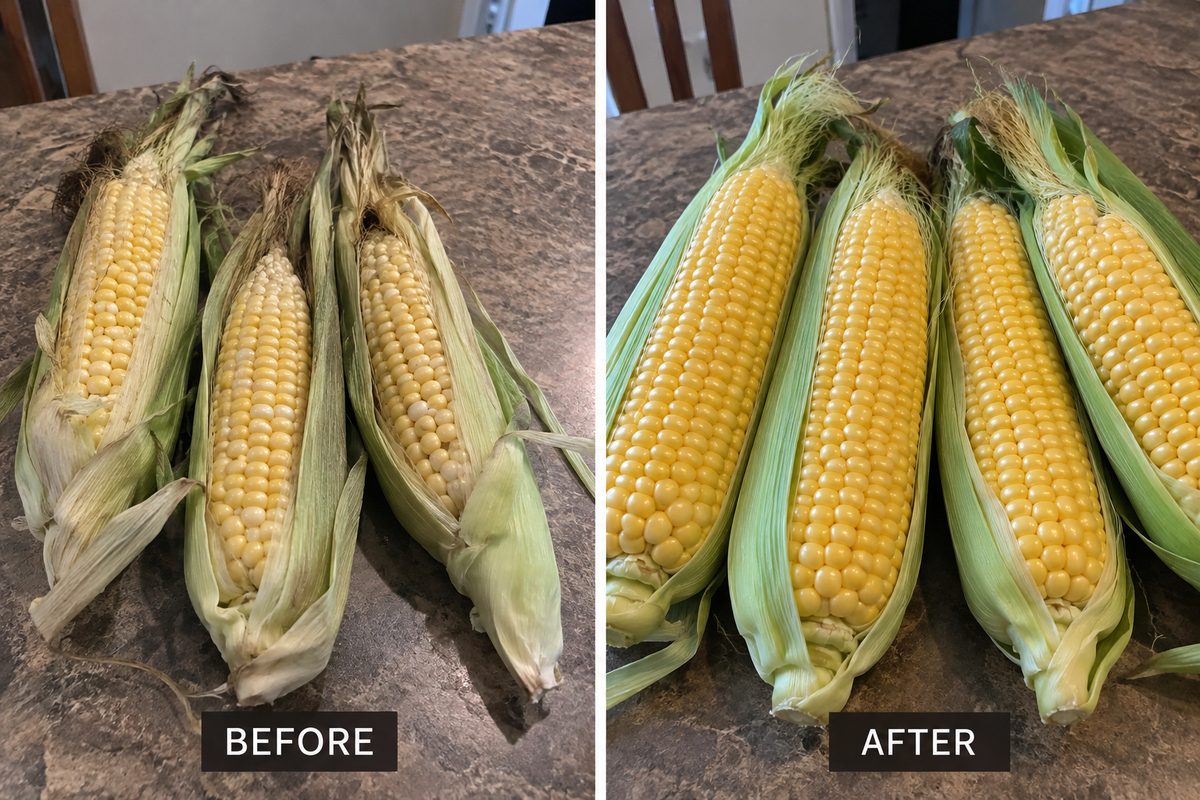
Patchy ears to full, plump cobs: before and after
Patchy ears to full, plump cobsGappy, half-filled ears one year. Fat cobs filled to the tip the next.Dale W., Iowaplaceholder name

Individual results. Results depend on climate, starting soil and how closely the method is followed.

Massive growth

5 scientifically proven laws to naturally grow beautiful, delicious, healthy crops

Without disease, chemicals or pests. Break one and your plants struggle no matter what you add. Follow all five and the garden starts running itself. Click each law.

12+BRIX

Why insects ignore healthy plants

Follow the 5 laws and your plants make more sugar. High-sugar sap (measured in Brix) is something sucking insects can't digest, so pests move on to weaker plants. Pests are nature's clean-up crew for sick plants. The book shows you how to measure Brix with a simple refractometer, the pest thresholds, and what drives it down.

60-second soil test

Which law is your garden breaking?

Five yes-or-no questions. Answer from memory; you don't need tools.

Free Starter Kit

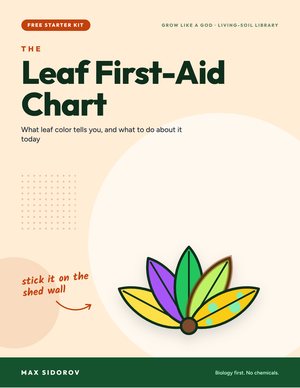
Read Chapter 1 free + get the Leaf First-Aid Chart

Two things, one email. Start reading tonight and see if the method fits your garden before you spend a cent.

Chapter 1: Who really feeds your plants The soil food web, the numbers under your feet, the 4 stages of soil life, and the sentence most gardeners get backwards. + Leaf First-Aid Chart Diagnose yellow, purple, spotted or curling leaves in 60 seconds and get the natural fix.
Real gardens, real growers

Watch what happens when the soil comes back to life

Short videos from readers in their own gardens. No studio, no script.

Results not typical. Individual results vary with climate, starting soil and how closely the method is followed.

Sample names and quotes for layout. Replace with real reader videos.

Before & after · our gardens

Same bed, 14 months apart

Drag the handle to compare.

<>
AFTER · SEASON 2BEFORE

Drag the handle. Same raised bed, 14 months apart, following the 5 laws. [Replace with your own photos]

Seeing is believing

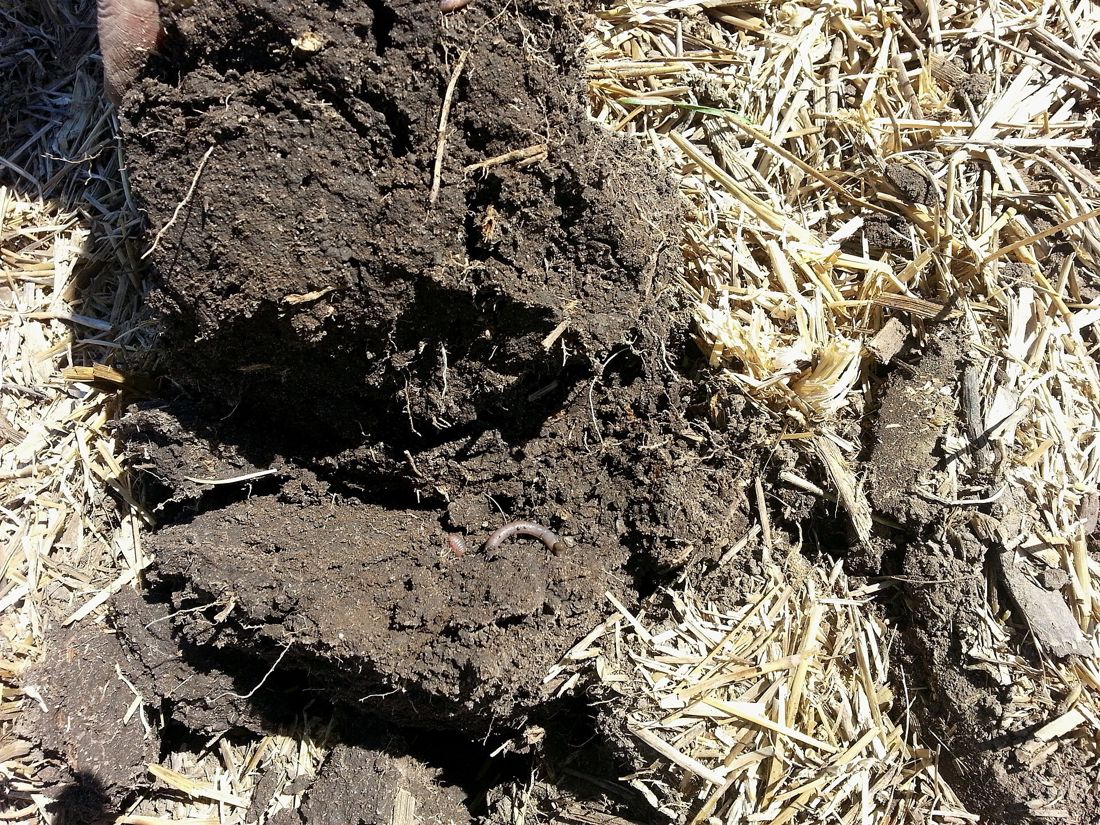
What living soil looks like, up close

You don't need a lab to tell living soil from dead dirt. These are real USDA field demonstrations, and you can repeat every one of them in your own yard.

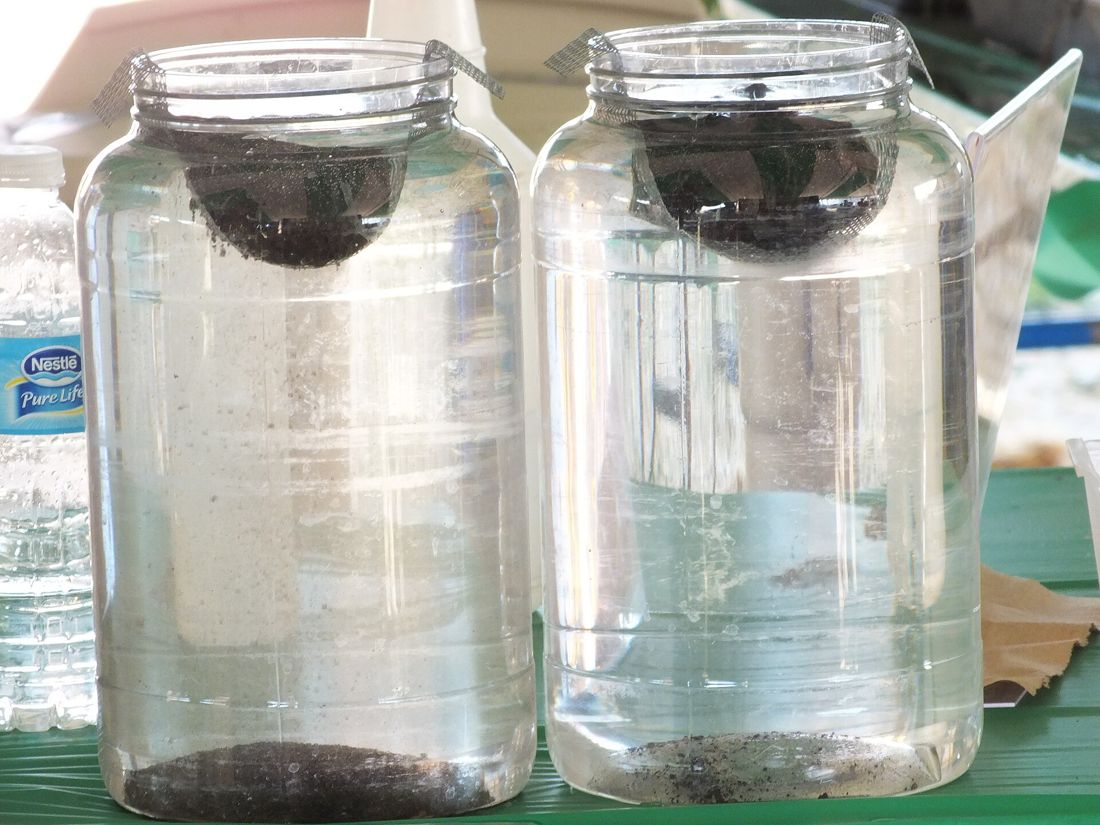
Two jars of water with a soil clod in each: the left one has collapsed, the right one holds togetherPLOWED FIELDNO-TILL FIELD
The soil-in-water testA dry clod from each field goes into water. The plowed soil (left) slumps into mud. The no-till soil (right), held together by roots and fungal glue, keeps its shape. That crumb is where your plants' air and water live.Photo: USDA NRCS South Dakota, Public domain via Wikimedia Commons
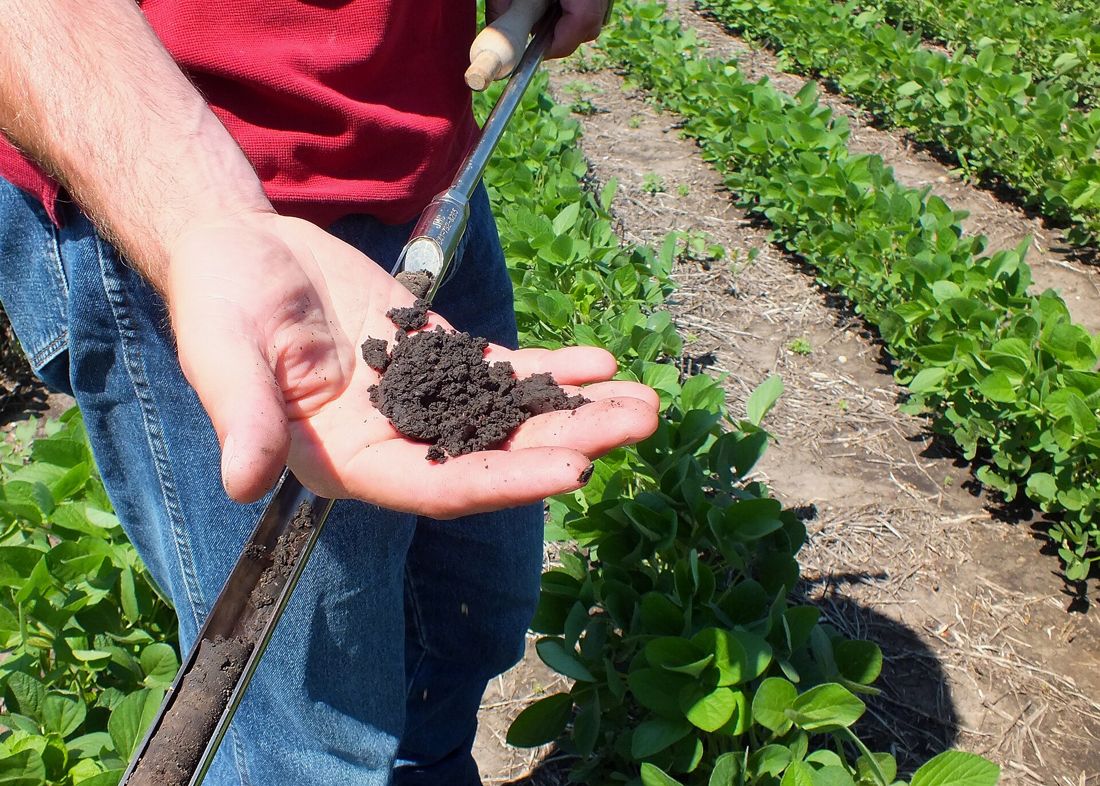
A hand holding dark, crumbly soil next to a row of soybeans
"Like chocolate cake""Healthy soil should look like chocolate cake with air holes permeating throughout," says USDA agronomist Eric Barsness, about a South Dakota farmer's no-till field full of roots and earthworms.Photo: USDA NRCS South Dakota, Public domain via Wikimedia Commons
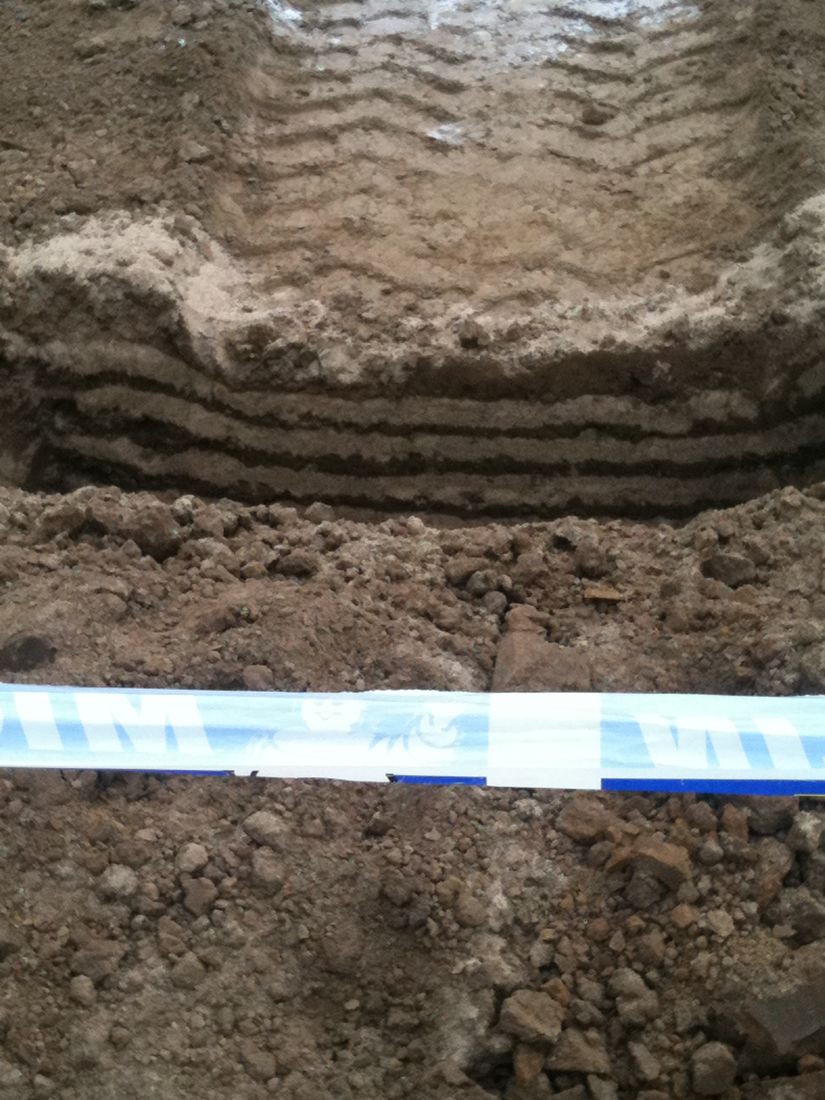
Compacted soil in layers under a tire trackDark, crumbly living soil under strawCOMPACTEDLIVING
Dead dirt vs. living soilLeft: soil pressed into flat, airless layers, where roots and water can't get through. Right: dark, crumbly soil under crop residue, full of pores, roots and life. Law 2 in the book shows you how to get from one to the other.Photos: Blonder1984, CC BY-SA 3.0 (license); USDA NRCS South Dakota, Public domain via Wikimedia Commons
Proof

It's working on farms, in deserts and in backyards

In the 1990s, a North Dakota farmer named Gabe Brown lost four crops in a row. Hail, then drought, then hail again. He was out of money and out of options. So he did what every expert told him not to do. He stopped plowing. He stopped buying the bags. He planted diverse cover crops, brought cattle back onto the land, and let the soil life do the work. Here is what his land looked like about twenty years later:

Brown's RanchBeforeAfterChange
Soil organic matter1.9%6.1%3× higher
Water soaking in0.5 in/hr8 in/hr16× faster
Synthetic fertilizerevery yearnearly 0≈ 90% less
Fungicides & pesticidesusednoneeliminated
Corn yield~100 bu/ac127 bu/ac27% above county avg.
Figures as reported in the book's case-study chapter, "Extraordinary results: what the numbers say."
"If you start thinking of soil not as a bag of chemicals but as the gut of the world, you're halfway to understanding."JEFF LOWENFELS · TEAMING WITH MICROBES
16×

Brown's Ranch, North Dakota

Stopped plowing after four failed crops. Water infiltration up 16×, organic matter tripled, synthetic fertilizer cut about 90%.

Book case study #1
> Amazon

The Johnson desert plots

A few handfuls of fungal compost, sprayed on in water. No fertilizer, the same water as before. His best fields out-grow the Amazon, by his own figures.

Book case study #3
+34%

Compost tea on cucumbers

Root bacteria up 80× and protozoa up 40× in two weeks. Yield up 34% without a drop of fertilizer.

Lowenfels, Teaming with Microbes

Results not typical. These reviews describe individual experiences; your results depend on your climate, your starting soil and how closely you follow the method.

Sample reviews for layout. Swap in real, named reader reviews before launch.
Don't take our word for it

It's working on farms and gardens of every size

From backyard beds to 10,000-acre farms, growers are feeding the soil life, digging less and cutting the bags. Here's what happened when they did.

These farms aren't affiliated with this book or paid by us; they use the same principles it teaches. Figures are as reported by each source. Results depend on climate, soil and management, and will vary.

Standing on their shoulders

A thousand years of science in the palm of your hands

From the farming traditions of Korea and India to the soil-microbiology labs of today. This book condenses the people who proved living soil works into one plain-language method.

1880sWinogradsky discovers the bacteria that feed on rock and air
1960sVigorov maps the medicinal compounds in fruit
1990sIngham names the soil food web; Brown stops plowing
2000sLowenfels brings the science to gardeners; KNF and JADAM spread worldwide
2010sJohnson's desert plots out-grow the Amazon
NowYour garden

Illustrations of each person's work. The researchers and farmers named here are credited for their published work and do not endorse this book.

The 5 laws in real backyards

Same ground. Different soil.

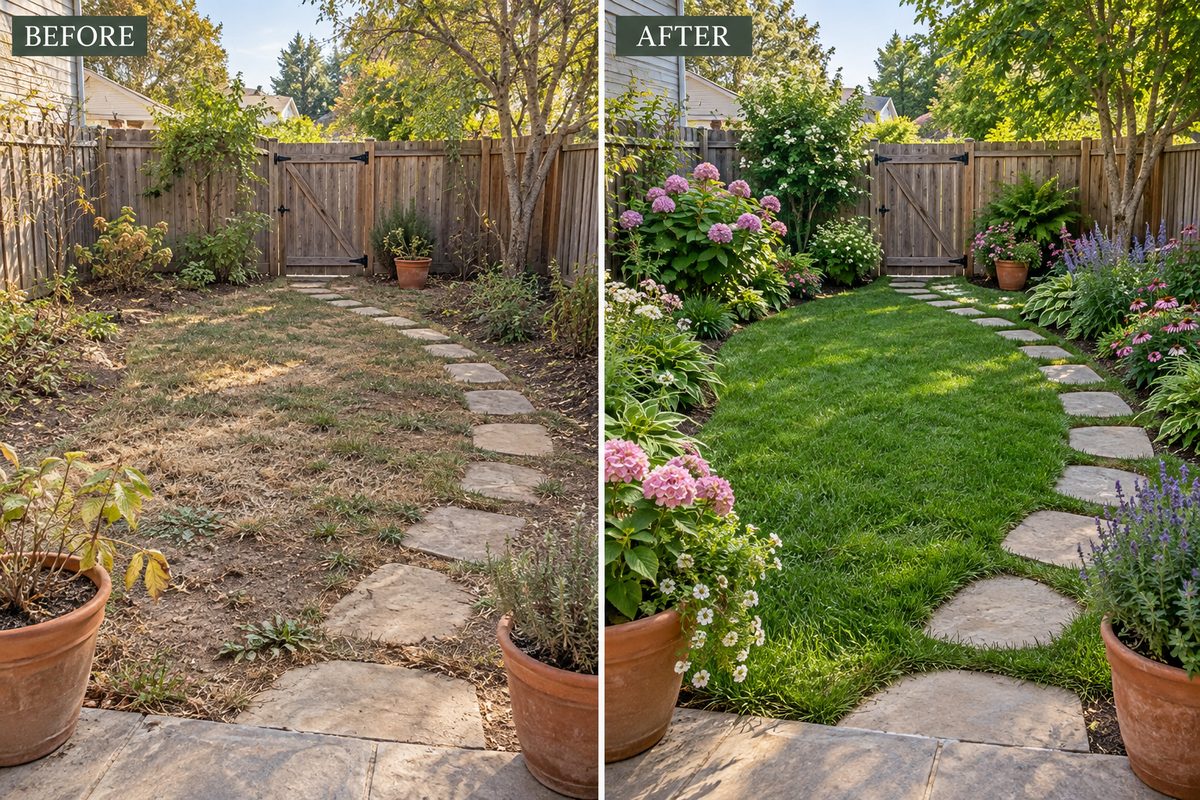
No digging, no chemicals, the soil covered and fed. Before and after.

Dry, patchy yard to a lush garden: before and after
Dry, patchy yard to a lush gardenBare, brown ground turned into thick green and flowering borders.Karen B., Calgary, ABplaceholder name
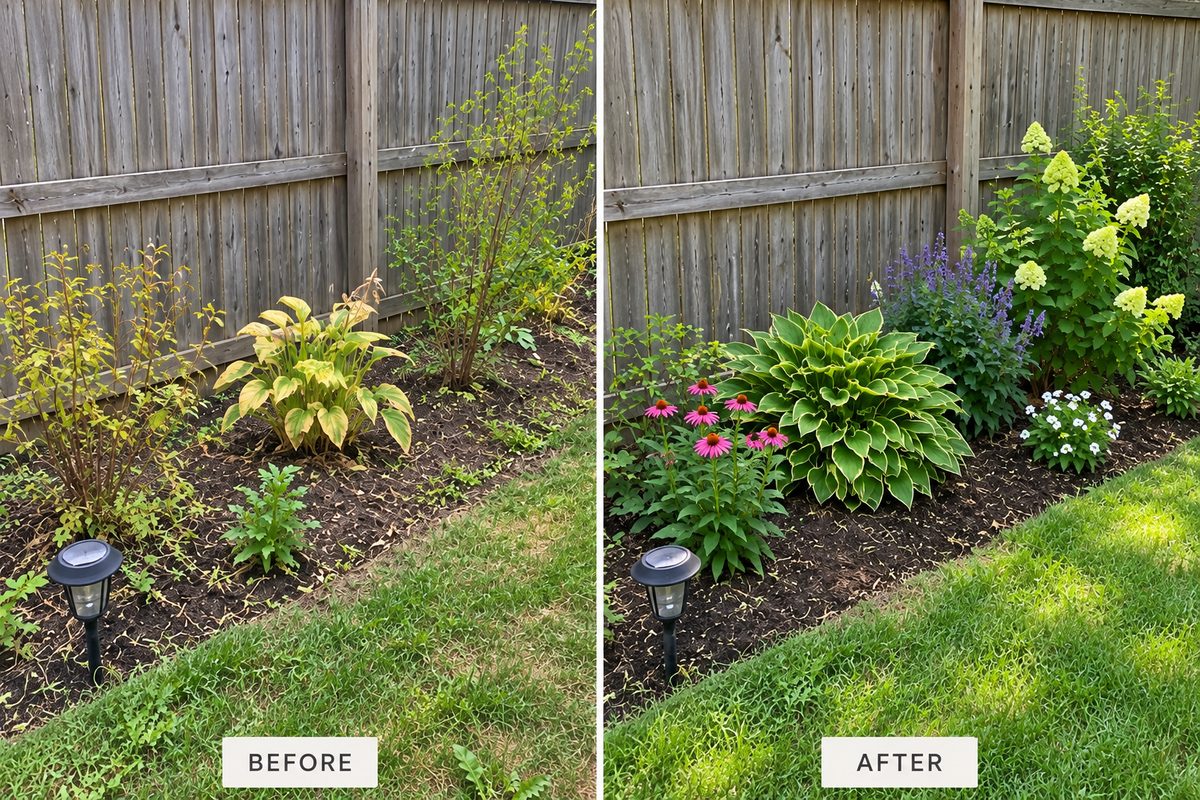
Tired border to a full, flowering bed: before and after
Tired border to a full, flowering bedPale, leggy plants filled out into a dense bed of colour.Tom R., Portland, ORplaceholder name
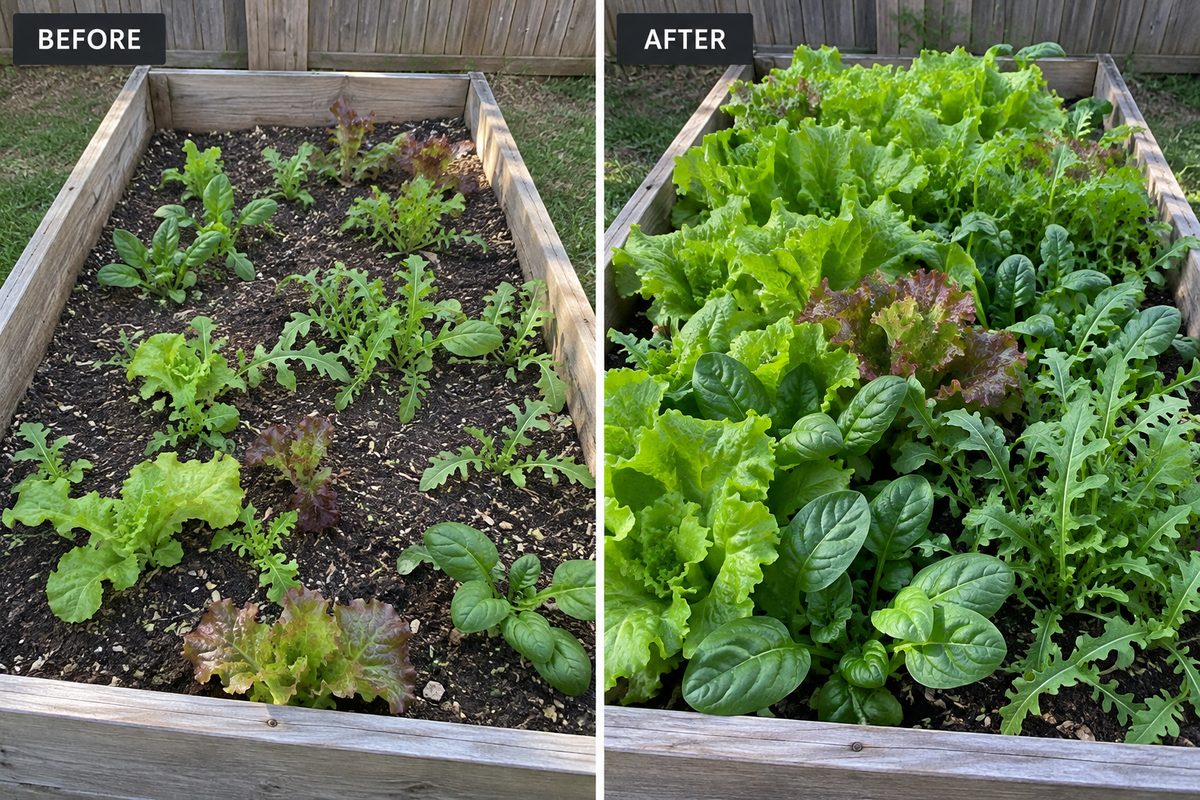
Sparse seedlings to a packed salad bed: before and after
Sparse seedlings to a packed salad bedThe same raised bed, now crowded with lettuce, spinach and arugula.Angela M., Halifax, NSplaceholder name

Individual results. Results depend on climate, starting soil and how closely the method is followed.

What's inside · 343 pages · 4 parts

The No-Dig, No-Chem Permaculture Bible

Build living soil that feeds your family for generations

Part 1

The Soil Food Web

  • Who really feeds your plants: the three great discoveries that flip gardening upside down
  • The 4 stages of soil life, from bare dirt to ancient forest, and where your garden sits today
  • Why grasses run on bacteria and trees run on fungi, and why getting this wrong stalls everything
  • How bacteria and fungi mine food out of rock
  • Weeds as indicators: what each weed is telling you about your soil
  • Real farm results: Brown's Ranch, Johnston's Regenerative, and the Johnson desert
Part 2

The 5 Laws of Plant Health

  • Life, Oxygen, Carbon, pH, Calcium & Phosphorus, with tests you can do in your yard
  • The C:N formula: why hay feeds grass and wood chips feed trees
  • The "fungal blanket" technique for fruit trees, step by step, with a seasonal calendar
  • Brix: why healthy plants don't get eaten
  • The 12 elements your plants actually eat, and the order that matters
Part 3

Creating New Life

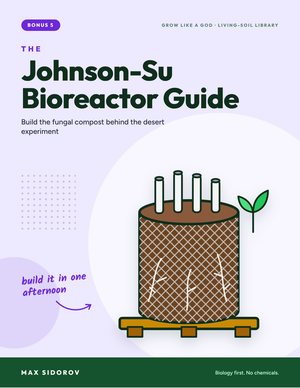
  • Johnson-Su compost: the fungal bioreactor behind the desert experiment
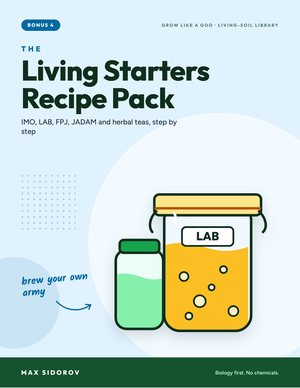
  • Living starters: beginner recipe, JADAM, and Korean Natural Farming IMO
  • IMO, LAB and FPJ, the biological "growth bombs"
  • Starters or compost? When to use which
  • Food-forest architecture: layering trees, shrubs, ground cover and vines
Part 4

Tables, Cheat Sheets & Planting

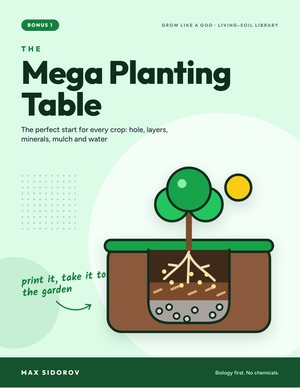
  • Mega planting table: the perfect start for 8 crop groups
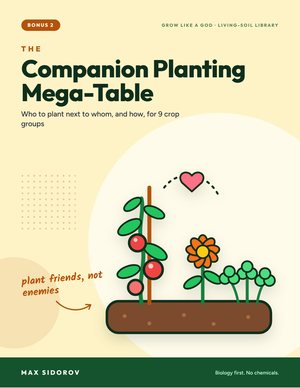
  • Mega companion table: who to plant next to whom
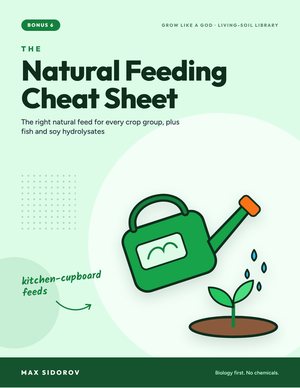
  • Natural feeding cheat sheet for every crop group
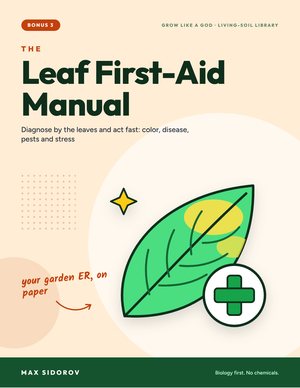
  • Leaf first-aid table: diagnosis and emergency treatment
  • Blueberries, apples, and the most nutrient-dense berry varieties
Author photo
(add Max's photo here)
About the author

Max Sidorov

Max spent years pulling the soil-food-web research of Elaine Ingham, Jeff Lowenfels, David Johnson and the early Russian soil microbiologists out of journals and textbooks, and testing it in real beds and orchards. This book is the result: the science translated into plain steps you can follow this weekend.

Picture next August

The garden everyone on your street asks about

  • Baskets that are heavy. Tomatoes that taste like the ones from your grandmother's garden. Apples that keep through winter.
  • Your kids eating peas straight off the vine, knowing exactly what's in their food.
  • The neighbours leaning over the fence asking what on earth you did. You become the person people come to for advice.
  • A legacy. Soil that's richer the day you hand it to your children than the day you got it.
Why this works when other methods didn't

Faster, easier, and guaranteed

certain

Proven, then guaranteed

The method is built on decades of published soil science and documented farm results. Then we remove the risk twice: 90 days to get a full refund, no questions asked, and a full growing season to see it work.

Read the guarantee
fast

A fast-start plan

  1. Day 1Stop digging. Cover every bare bed.
  2. Week 1Brew your first living starter from rice and leaf litter.
  3. PlantingA handful of fungal compost in every hole.
  4. Season 1Sweeter fruit, fewer pests, less watering.
  5. Year 2–3Darker, deeper soil. Inputs near zero.
effortless

You do less, not more

You hire a workforce of billions that works 24/7, with no wages, no days off and no breakdowns.

Double-digging
Mulch and walk away
Spray schedules
Plants that defend themselves
Weekly feeding
Feed the soil a few times a year
Guessing
Look it up in a table
Real gardens · real photos

From dead ground to food

The same principles this book teaches, on real ground: feed the soil life, cover the soil, stop digging. Here's what it looks like.

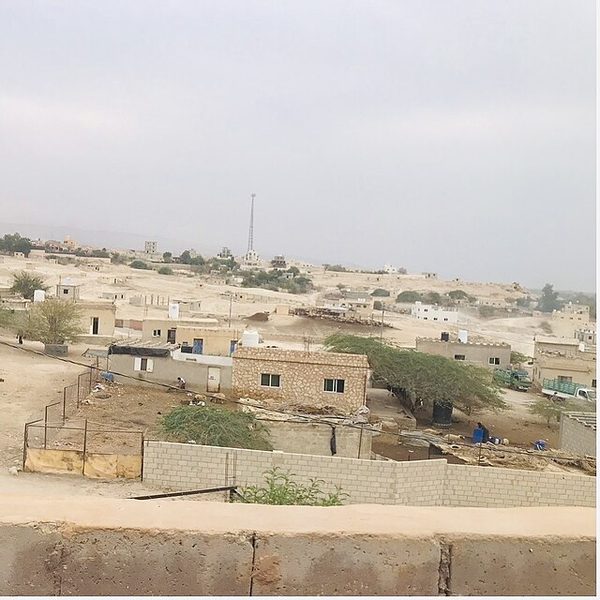
Bare desert land and houses in the Dead Sea Valley, JordanTHE DESERT
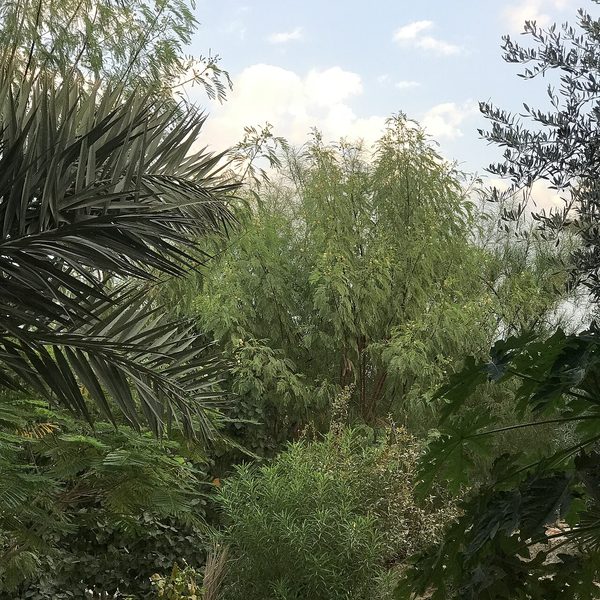
Green trees growing inside the Greening the Desert projectTHE OASIS
Desert to food forest, JordanGreening the Desert, in the Dead Sea Valley. On the left, the bare land around the site. On the right, inside it, where swales, mulch, compost and pioneer trees turned dry ground into a green oasis.Photos: Jengod, CC BY-SA 4.0 (license), cropped, via Wikimedia Commons
START
LATER
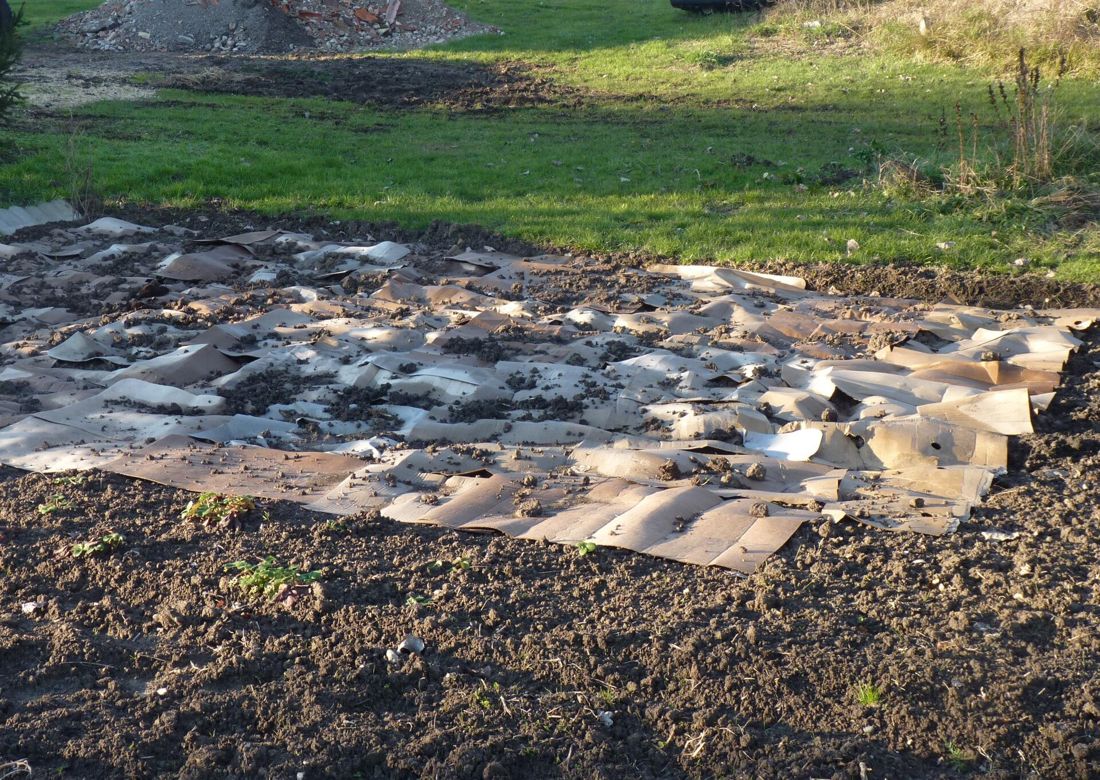
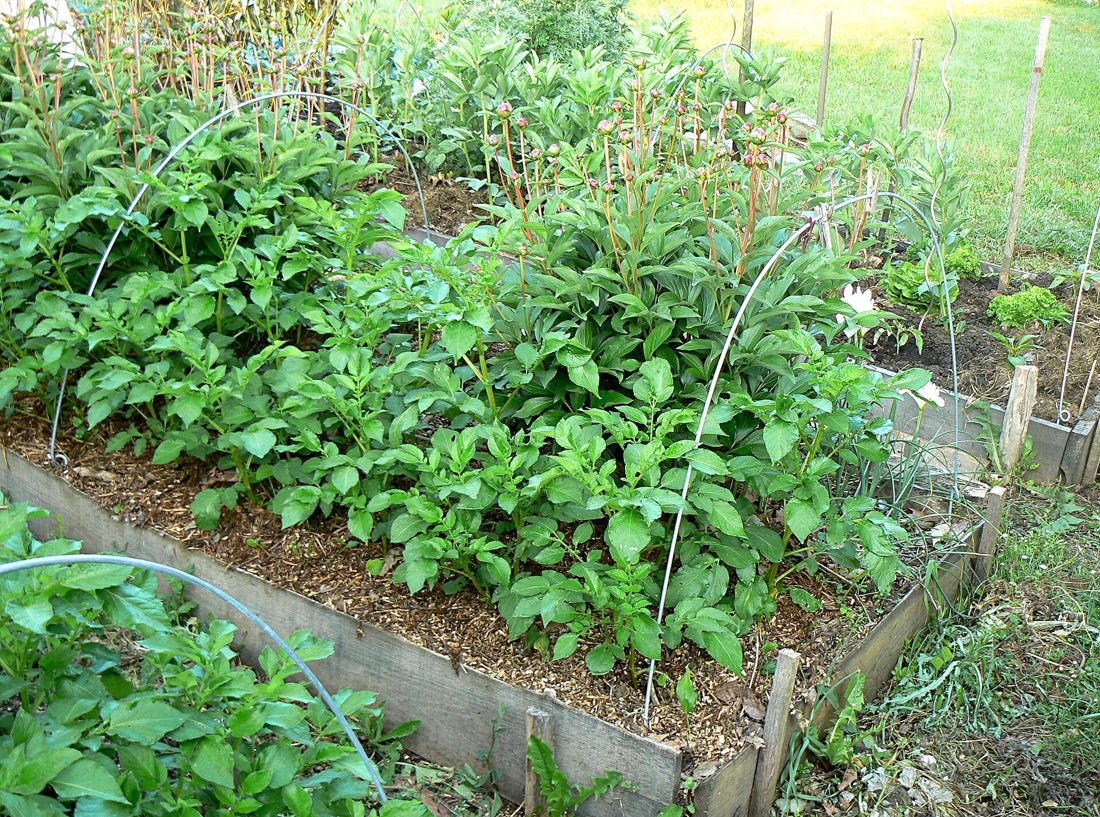
Lawn to food, no diggingCardboard and layers of organic matter go straight on top of the grass. No spade, no tilling. Then potatoes go in, right into the layers. A no-dig "lasagna" garden in France.Photos: Natureln, CC BY-SA 4.0 (license) via Wikimedia Commons
START
LATER
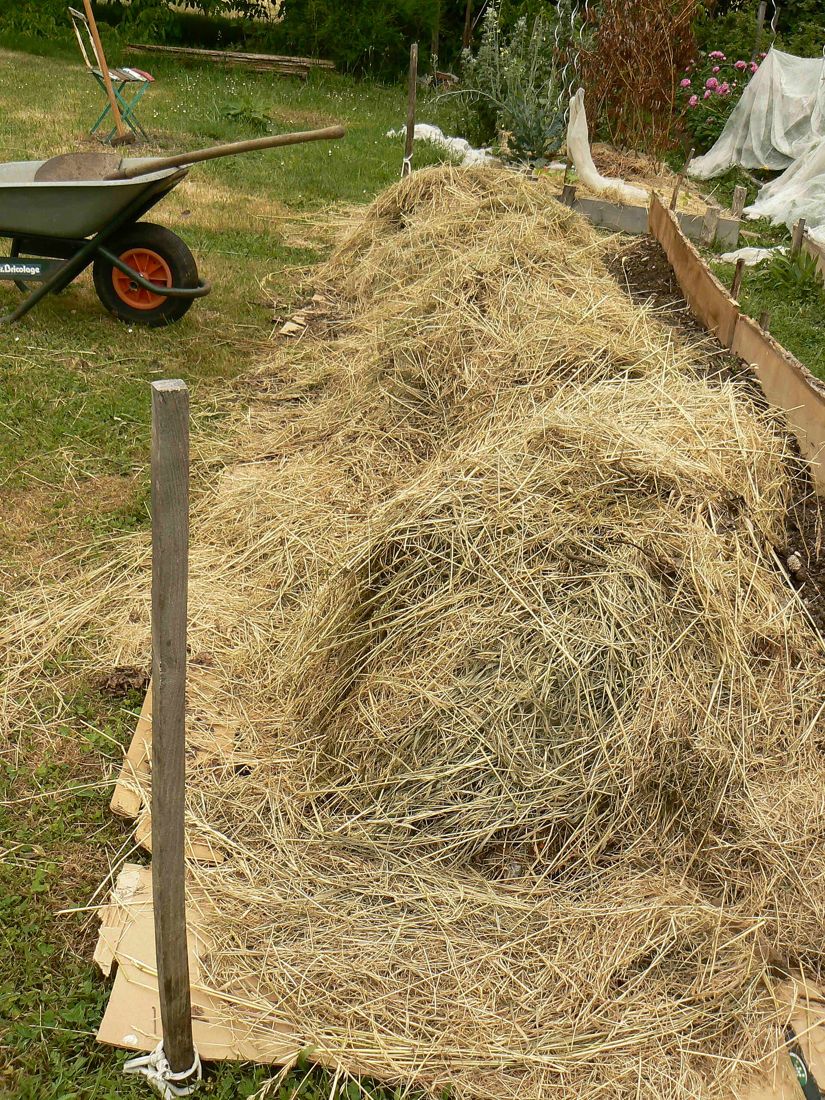
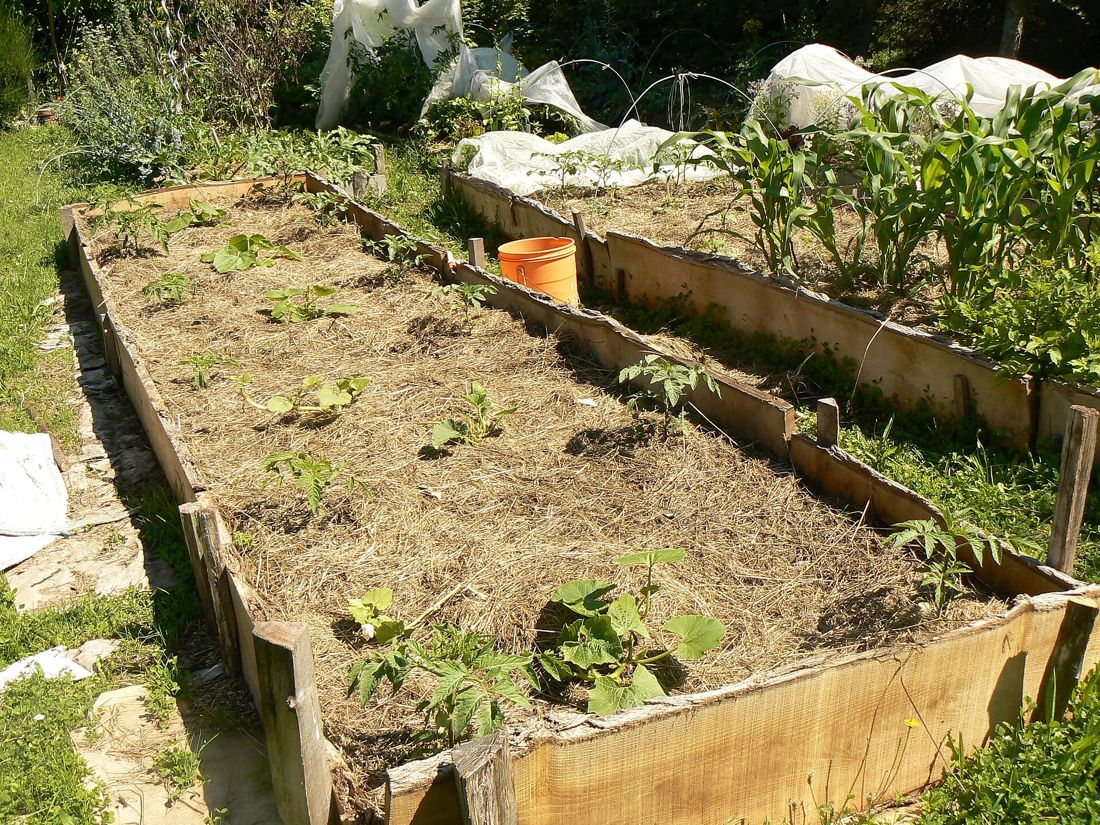
A pile of hay becomes a vegetable bedHay goes on as mulch and food for the soil life, and courgettes (zucchini) are planted straight into it. Same gardener, same method.Photos: Natureln, CC BY-SA 4.0 (license) via Wikimedia Commons
THE TRIAL
THE BEDS
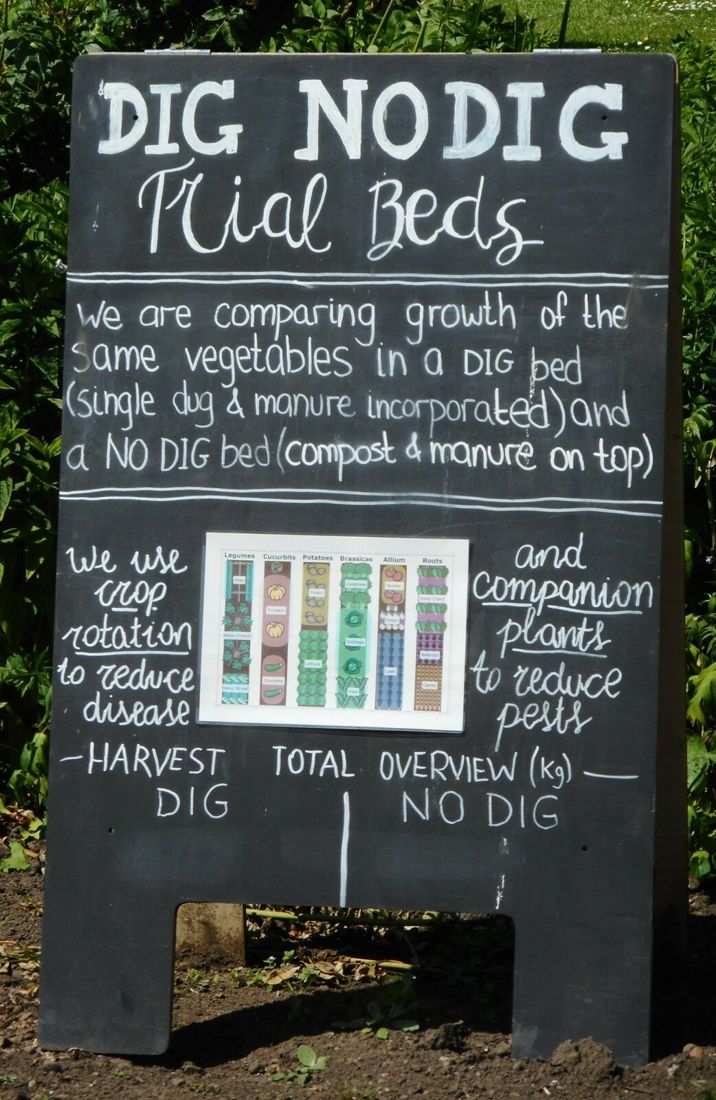
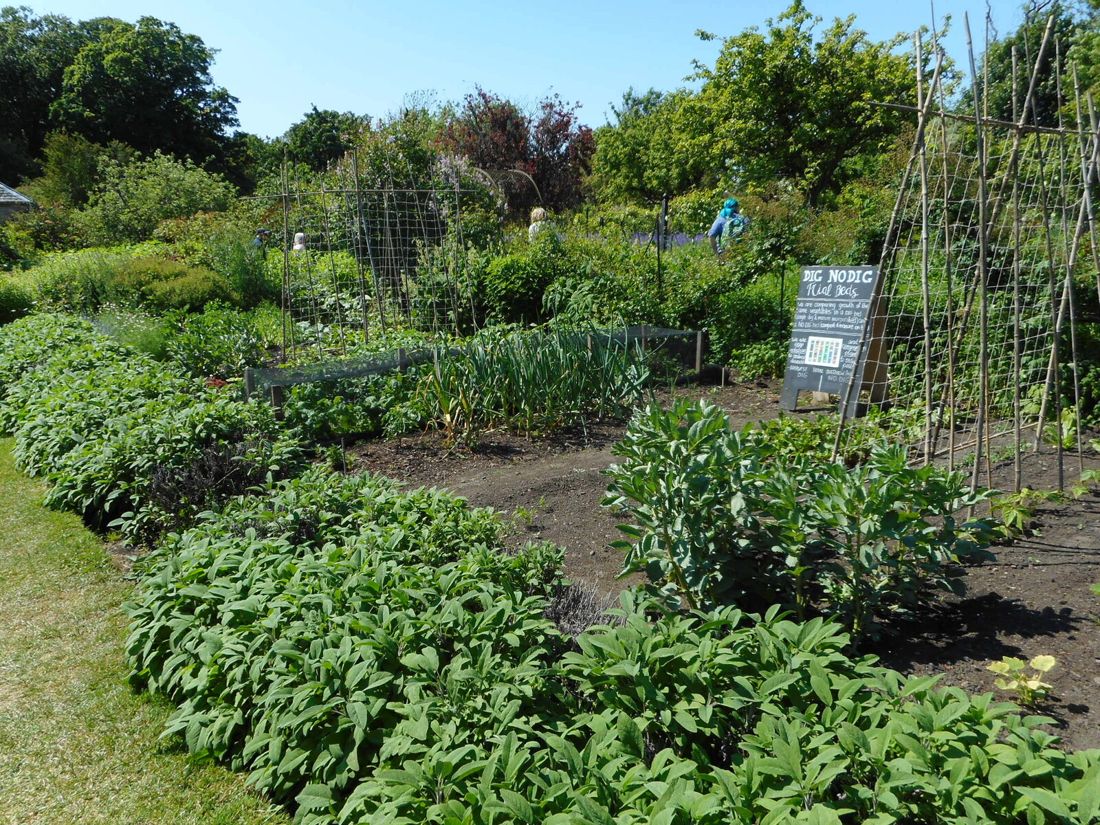
Dig vs. no-dig, side by sideA UK garden growing the same vegetables in dug and undug beds to compare them. It's a simple side-by-side test you can run in your own beds.Photos: Richard Sutcliffe, CC BY-SA 2.0 (license) via Wikimedia Commons

Real, credited photos. These gardeners aren't readers of this book; results vary with climate, soil and care.

You'll never garden alone again

Join growers who've been there and done that

Private community

Never feel lost or scared about your garden again

  • Post a photo of a sick leaf and get answers from people who have fixed the same thing
  • Find growers in your climate, on your soil type, growing your crops
  • Share recipes for compost, starters and teas that are working right now
  • Celebrate your first worm, your first heavy harvest, your first spray-free season
R
Rachel · clay soil, zone 5Year two of no-dig and I counted 14 worms in one spadeful. Last year: zero.
D
Dan · raised bedsPurple undersides on my pepper leaves, phosphorus? Photo attached.
Example posts shown for illustration
15 bonus guides · $499 value · yours free

Look inside the guides that come with the book

Every guide is designed, illustrated and ready to print. Tap any cover to flip through real pages.

Everything you get today

The book, the tools, the people and the guarantee

THE SOIL FOOD WEBGrow
Like
a God
How to get 100x more food from your garden naturallyMAX SIDOROV · 343 PAGES
Private
community12 MONTHS
Double
guarantee90 DAYS + SEASON
+ 15 PRINTABLE GUIDES, WORKBOOKS & TOOLS
Mega Planting Table cover
Companion Planting Mega-Table cover
Leaf First-Aid Manual cover
Living Starters Recipe Pack cover
Johnson-Su Bioreactor Guide cover
Natural Feeding Cheat Sheet cover
The Living Soil Calendar + wall poster coverNEW
The Backyard Soil Lab coverNEW
The 30-Day Fast-Start Workbook coverNEW
Small-Space Living Soil coverNEW
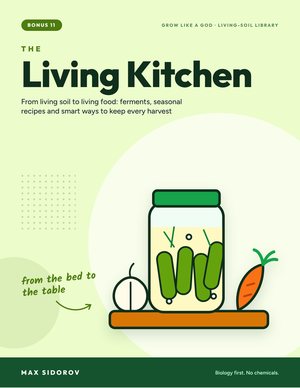
The Living Kitchen coverNEW
The North American Supplier Guide coverNEW
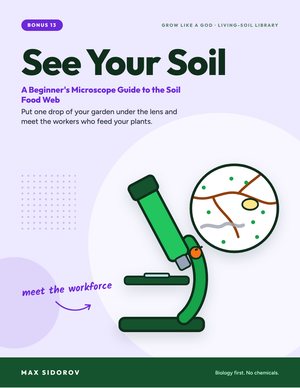
See Your Soil coverNEW
The Underground Army coverNEW
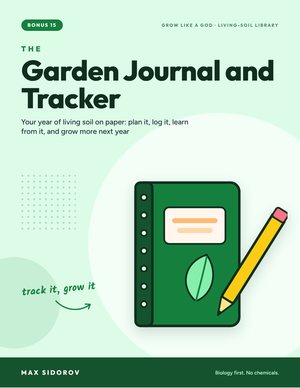
The Garden Journal and Tracker coverNEW

Everything is digital: read it tonight, print the tables, join the community in minutes.

Grow Like a God · Complete Package

The book, 15 printable guides and workbooks, the community and the guarantee

    Total value: $836
    $47 one-time
    Yes! I Want to Grow Like a God
    Instant digital accessDouble guaranteeSecure checkout
    VISAMASTERCARDAMEXPAYPALAPPLE PAY
    DOUBLE GUARANTEE
    Zero risk, twice

    The Living Soil Double Guarantee

    1

    90 days, no questions asked. If the book isn't for you, email us within 90 days for a full refund. No forms, no hoops. Keep the book and the bonuses anyway.

    2

    A full season, guaranteed. Apply the 5 Laws through one growing season. If your soil isn't visibly more alive, with more worms, better crumb and healthier plants, post your photos in the community and we'll extend your community access free for another full year.

    Read the full refund policy.

    90 days to love it. A full season to see it work.

    Questions

    Frequently asked questions

    Will this work on clay or sandy soil?

    Yes. Clay and sand are mostly crushed rock full of minerals. They're missing the biology that unlocks those minerals and builds crumb structure. The book shows you how to bring it back on either, including Johnson's desert sand and clay.

    I only have a small backyard or a few raised beds. Is this for me?

    Absolutely. The soil food web works the same under one bed as under a hundred acres. Small gardens often turn around fastest, because you can cover and inoculate every square foot in a weekend.

    What about cold climates with a short season?

    Living soil holds more water and warms more evenly, and the fungal network keeps working under mulch. The planting and feeding tables are organized by crop group, so you can apply them to whatever your season allows.

    How fast will I see results?

    Most growers notice better water holding and fewer pest problems in the first season. Soil colour, depth and worm counts keep improving every year after. The fast-start plan gets the first changes moving in week one.

    Do I need to buy special products?

    No. The method runs on leaves, wood chips, kitchen scraps, a little rice for microbe starters, and cover-crop seed. A refractometer for measuring Brix is optional and inexpensive.

    Is this real science or another gardening fad?

    It's built on the work of Dr. Elaine Ingham, Jeff Lowenfels, Dr. David Johnson, Sergei Winogradsky and other soil microbiologists, plus documented farm results like Brown's Ranch. Sources are named throughout the book.

    What format is the book?

    A 343-page digital edition you can read on your phone, tablet or computer, with printable tables and cheat sheets. Access is instant after checkout.

    How does the community work?

    You get a login to the private community the moment you buy, with 12 months of access. Post photos of your beds, leaves and soil tests, ask questions, and swap what is working with growers in climates and soils like yours.

    What if it doesn't work for me?

    You're covered twice. For 90 days you can email us for a full refund, no questions asked, and keep the book and bonuses. And if you apply the 5 Laws through a full growing season and your soil isn't visibly more alive, post your photos in the community and we'll extend your access free for another year.

    Your soil is waiting

    The workforce is already in your garden. Put it back to work.

    Every season you wait is another season of buying bags, fighting pests and guessing. Start this weekend.

    Get Grow Like a God · $47
    Instant accessDouble guaranteePrivate community included
    Not ready? Start with Chapter 1 free

    P.S. If you skimmed to the bottom: you get the 343-page living-soil book, 15 printable guides and workbooks, and a private community, all for $47, backed by the Living Soil Double Guarantee. The only way to lose is to keep gardening the old way.

    Jenna Y. from Texasjust got Grow Like a God